The Internet Used to Be Embarrassing and That’s Why It Was Good
Custom profiles, terrible edits, fan pages and glitter GIFs. When did being online become so concerned with looking cool?
TEXT

It’s time to take us all back to the days of Tumblr, with a page dedicated to some kind of ship between two YouTubers (a phan account, if you will) and a username that you would rather die than reveal today. I remember the first time I became obsessed with a website where you could have your own profile, and that was over on Blogspot where I made a Moviestarplanet blog with a friend – aged eleven. A little time capsule that still exists on the internet; one that I came to find pretty embarrassing when I reached my teens. But I’m so glad it still exists now.
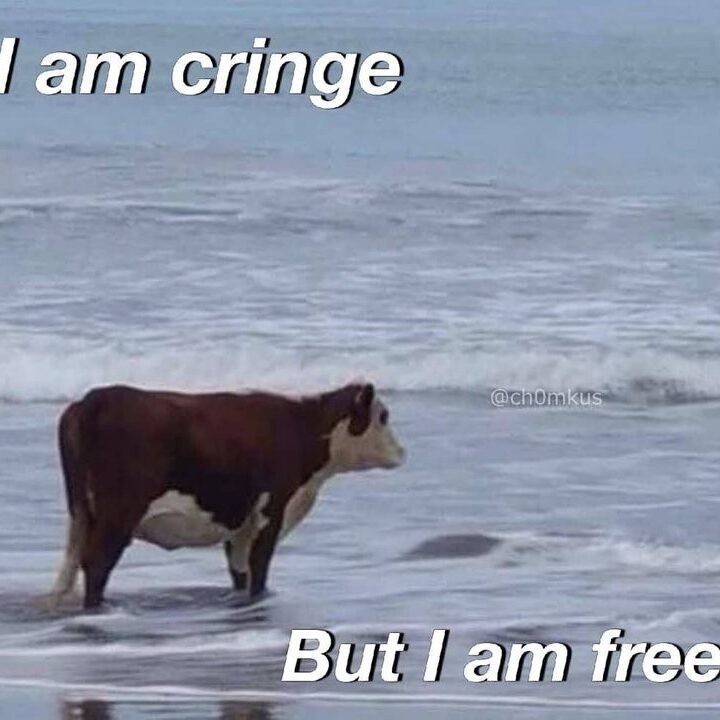
But that’s what the internet used to harbour more. Embarrassment. Not in some calculated or pointed way, just in a way where everyone seemed to lack self-awareness when it came to the word ‘cringe’. Without an ability to measure what should be avoided, people were unfiltered in a way that I would argue hasn’t been seen online since. Nowadays, everything has a pressure to be large-scale content. If it isn’t performing, is it even worth posting?
When I start to feel pressured by numbers, or feel a certain need to appear a way online creeping up on me, I take myself back to the pinnacle of online activities – the part that you are likely to look back on and laugh about. Poor fan edits, status updates on Facebook, Wattpad stories. Maybe even a Youtube video filmed on a 480p laptop webcame with the worst overhead lightning ever. Now with a strict standard set on the internet, there is already a distance between you and embarrassment before anything is seemingly posted. We’re aware of trends, angles, tricks to perfect our videos, and the quality of casual filming has raised dramatically. Caring too much has become something to apologise for, and being seen trying is arguably worse than failing. It’s as if we’ve collectively decided that the safest way to exist online is to make sure nobody can ever accuse us of taking ourselves seriously.
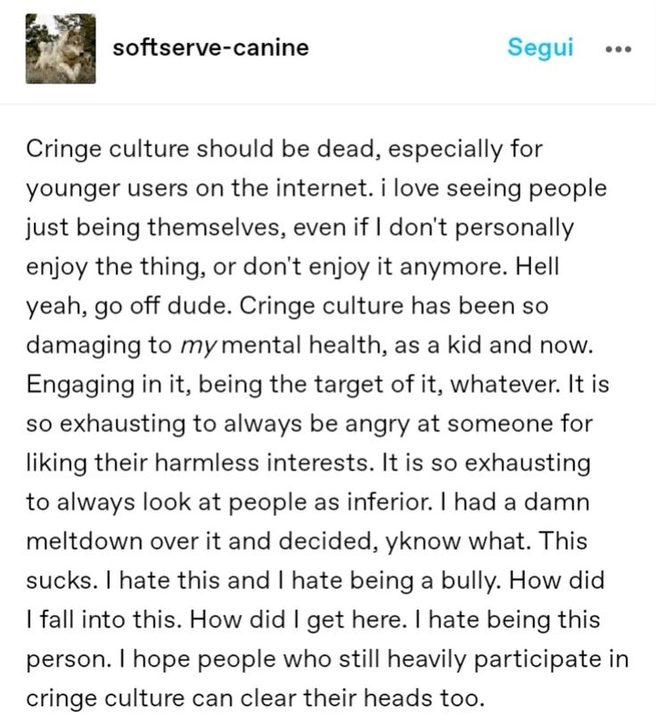
Ore Adeyoola explores this brilliantly in her May 2025 Substack essay, The Resurrection of Cringe Culture (and Why It’s Terrible). Reflecting on the pressure to conform, she writes: “Expressing yourself without caution, without pause, is radical.” It’s a sentiment that feels particularly relevant when so much of our online behaviour is shaped by the possibility of being judged. When people can turn a stranger’s awkward moment into a viral joke – i.e. the screen recording of that guy’s dating profile, where he’s vaping in the mirror, which went viral the other month on Twitter – it’s hardly surprising that we become more cautious about sharing ourselves in the first place.
And without this coming off as poor speculation, Ofcom’s Online Nation 2025 report found that only 25% of adults felt freer to be themselves online than offline, down from 30% the previous year. Its April 2026 research also found that fewer adults were actively posting, sharing or commenting on social media than in 2024. It’s possible we’ve become far more selective about what we’re posting, whether it’s good enough to post, all while in a climate where some influencers can be posting up to ten times a day.
The thing is, we haven’t necessarily stopped being weird. We’ve just become much more aware of how our weirdness might be perceived by the larger online audience. A niche interest can become a TikTok trend overnight; you being caught in a stupid act can become viral in under a day. The internet has always possessed the dangerous capacity to expose people, but the scale in which this exposure can happen has dramatically changed – and that’s what makes the online population so much more hesitant.
And it’s difficult to blame anyone for that. Growing up online means learning that the things you post today might follow you into a completely different version of yourself tomorrow. The embarrassing blog you made at eleven, the questionable outfit you wore at fourteen, the overly enthusiastic fan account you ran at sixteen are sort-of digital achievements on your online journey, but the internet has a habit of preserving versions of ourselves that we would otherwise have been allowed to outgrow, and never look back on.
Maybe that’s why I still find something quite lovely about my old MovieStarPlanet blog. It’s embarrassing, yes, but it’s also proof that I was once a child who wanted to make something with a friend and put it out into the world. I wasn’t thinking about my digital footprint or whether the blog represented me accurately. I was eleven. I liked a game, I wanted to write about it, and I had found somewhere great and non-judgemental to do that.
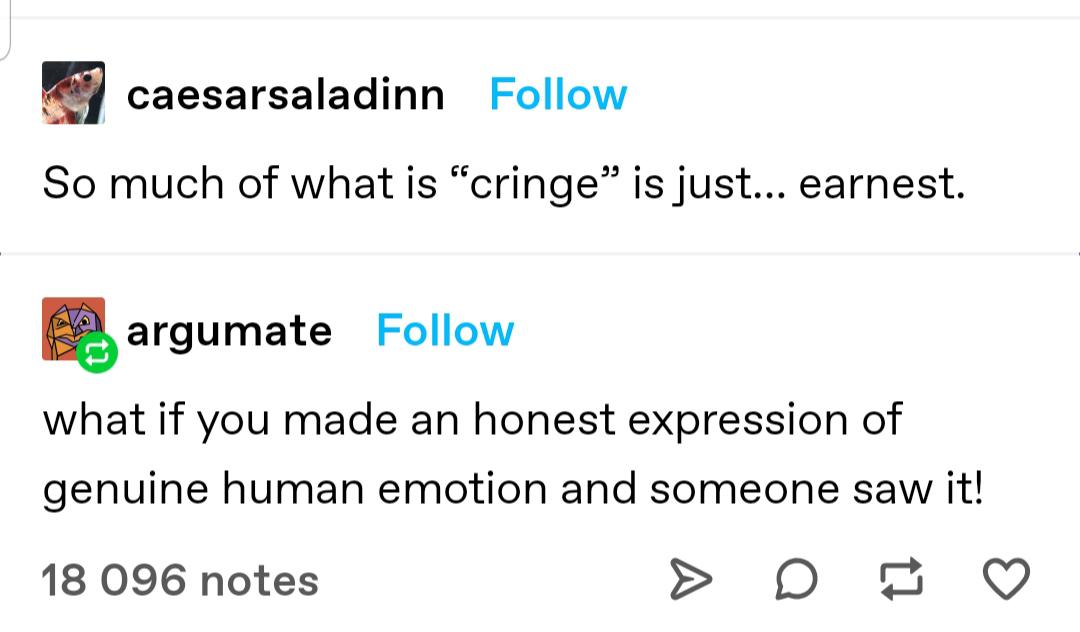
Because if the internet has taught us anything, it’s that the things we once found mortifying can become the things we miss most. The glitter graphics, the really horrible usernames that come to haunt us, the old fan pages (I’m still locked out of one I’ve been trying to delete for years) are all reminders of a time when we were less concerned with how we appeared to strangers. We were just having fun.
And maybe it’s time we let ourselves do that again.
It’s time to take us all back to the days of Tumblr, with a page dedicated to some kind of ship between two YouTubers (a phan account, if you will) and a username that you would rather die than reveal today. I remember the first time I became obsessed with a website where you could have your own profile, and that was over on Blogspot where I made a Moviestarplanet blog with a friend – aged eleven. A little time capsule that still exists on the internet; one that I came to find pretty embarrassing when I reached my teens. But I’m so glad it still exists now.
But that’s what the internet used to harbour more. Embarrassment. Not in some calculated or pointed way, just in a way where everyone seemed to lack self-awareness when it came to the word ‘cringe’. Without an ability to measure what should be avoided, people were unfiltered in a way that I would argue hasn’t been seen online since. Nowadays, everything has a pressure to be large-scale content. If it isn’t performing, is it even worth posting?
When I start to feel pressured by numbers, or feel a certain need to appear a way online creeping up on me, I take myself back to the pinnacle of online activities – the part that you are likely to look back on and laugh about. Poor fan edits, status updates on Facebook, Wattpad stories. Maybe even a Youtube video filmed on a 480p laptop webcame with the worst overhead lightning ever. Now with a strict standard set on the internet, there is already a distance between you and embarrassment before anything is seemingly posted. We’re aware of trends, angles, tricks to perfect our videos, and the quality of casual filming has raised dramatically. Caring too much has become something to apologise for, and being seen trying is arguably worse than failing. It’s as if we’ve collectively decided that the safest way to exist online is to make sure nobody can ever accuse us of taking ourselves seriously.
Ore Adeyoola explores this brilliantly in her May 2025 Substack essay, The Resurrection of Cringe Culture (and Why It’s Terrible). Reflecting on the pressure to conform, she writes: “Expressing yourself without caution, without pause, is radical.” It’s a sentiment that feels particularly relevant when so much of our online behaviour is shaped by the possibility of being judged. When people can turn a stranger’s awkward moment into a viral joke – i.e. the screen recording of that guy’s dating profile, where he’s vaping in the mirror, which went viral the other month on Twitter – it’s hardly surprising that we become more cautious about sharing ourselves in the first place.
And without this coming off as poor speculation, Ofcom’s Online Nation 2025 report found that only 25% of adults felt freer to be themselves online than offline, down from 30% the previous year. Its April 2026 research also found that fewer adults were actively posting, sharing or commenting on social media than in 2024. It’s possible we’ve become far more selective about what we’re posting, whether it’s good enough to post, all while in a climate where some influencers can be posting up to ten times a day.
The thing is, we haven’t necessarily stopped being weird. We’ve just become much more aware of how our weirdness might be perceived by the larger online audience. A niche interest can become a TikTok trend overnight; you being caught in a stupid act can become viral in under a day. The internet has always possessed the dangerous capacity to expose people, but the scale in which this exposure can happen has dramatically changed – and that’s what makes the online population so much more hesitant.
And it’s difficult to blame anyone for that. Growing up online means learning that the things you post today might follow you into a completely different version of yourself tomorrow. The embarrassing blog you made at eleven, the questionable outfit you wore at fourteen, the overly enthusiastic fan account you ran at sixteen are sort-of digital achievements on your online journey, but the internet has a habit of preserving versions of ourselves that we would otherwise have been allowed to outgrow, and never look back on.
Maybe that’s why I still find something quite lovely about my old MovieStarPlanet blog. It’s embarrassing, yes, but it’s also proof that I was once a child who wanted to make something with a friend and put it out into the world. I wasn’t thinking about my digital footprint or whether the blog represented me accurately. I was eleven. I liked a game, I wanted to write about it, and I had found somewhere great and non-judgemental to do that.
Because if the internet has taught us anything, it’s that the things we once found mortifying can become the things we miss most. The glitter graphics, the really horrible usernames that come to haunt us, the old fan pages (I’m still locked out of one I’ve been trying to delete for years) are all reminders of a time when we were less concerned with how we appeared to strangers. We were just having fun.
And maybe it’s time we let ourselves do that again.

Enjoyed this story? Support independent gaming and online news by purchasing the latest issue of G.URL. Unlock exclusive content, interviews, and features that celebrate feminine creatives. Get your copy of the physical or digital magazine today!