The Contradictions of Takashi Murakami
Takashi Murakami's vibrant worlds have captivated audiences for decades, but beneath the rainbow flowers lies a more complicated reality. Following a visit to Stepping on the Tail of a Rainbow at the Cleveland Museum of Art, G.URL explores the tension between Murakami's hopeful artistic vision and his continued support of NFTs. Can one of contemporary art's most celebrated creators reconcile his legacy with the environmental cost of digital ambition?
TEXT

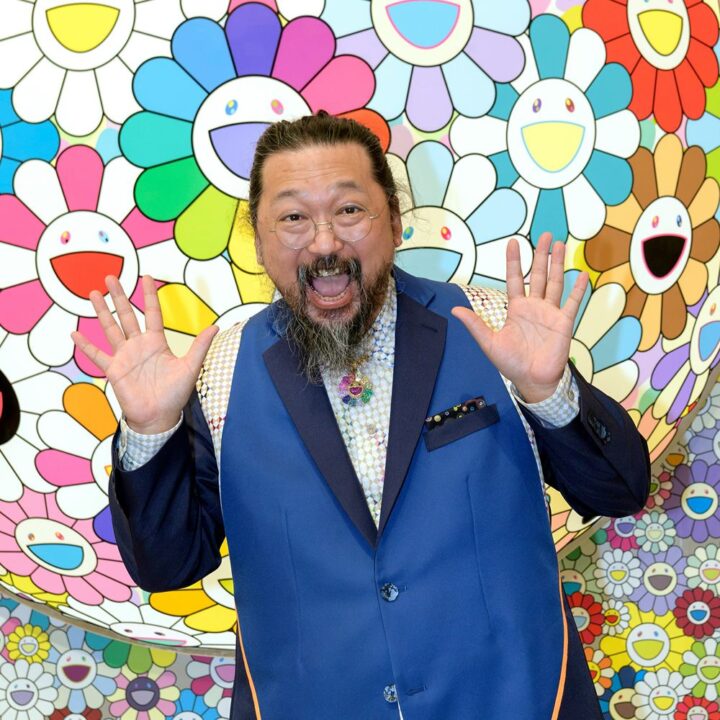
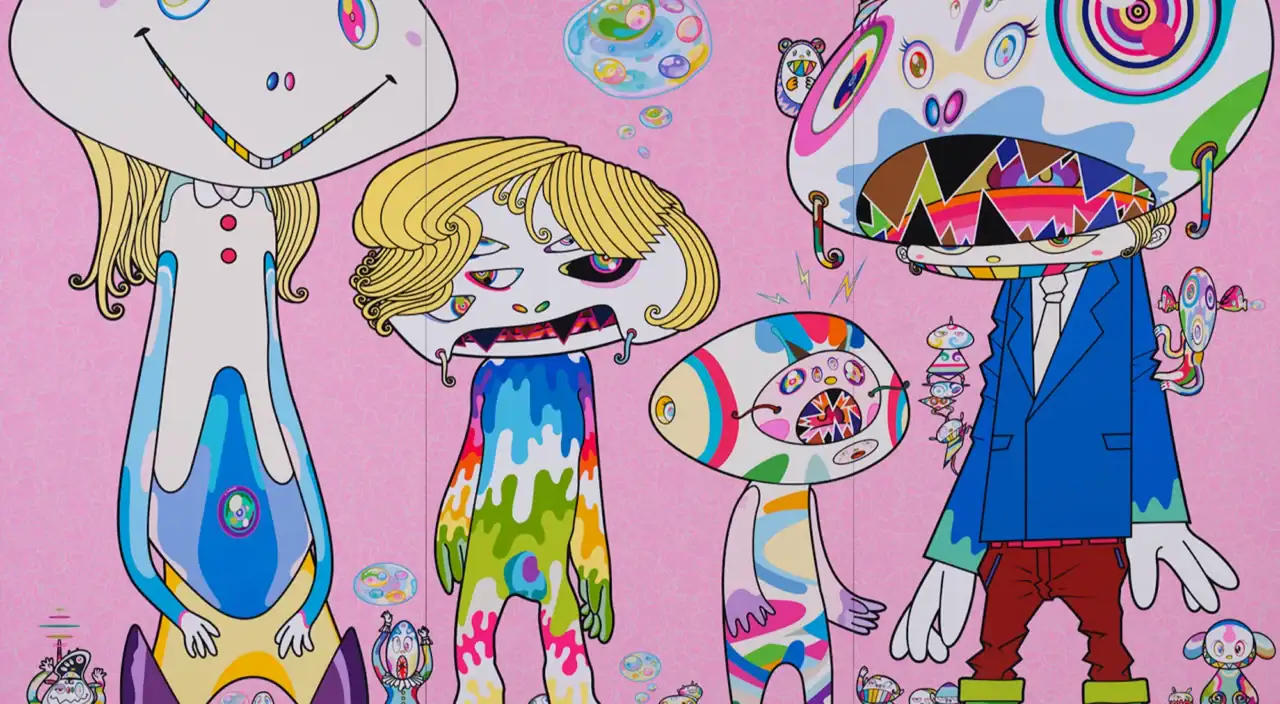
For years, the bold colours and vivid imagery of Japanese artist Takashi Murakami have captivated audiences around the world. He is, perhaps, most known for his infamous album art present on the covers of a certain tremendously controversial and problematic rappers’ hit albums Graduation (2007) & Kids See Ghosts (2018). In the 2000s and 2010s, his style came to represent a certain nonchalant and childlike wonder through the refined lens of his unique art. Murakami is influenced heavily by pop art, pop culture, fashion, tradition, anime, and manga in his fascinating pieces.
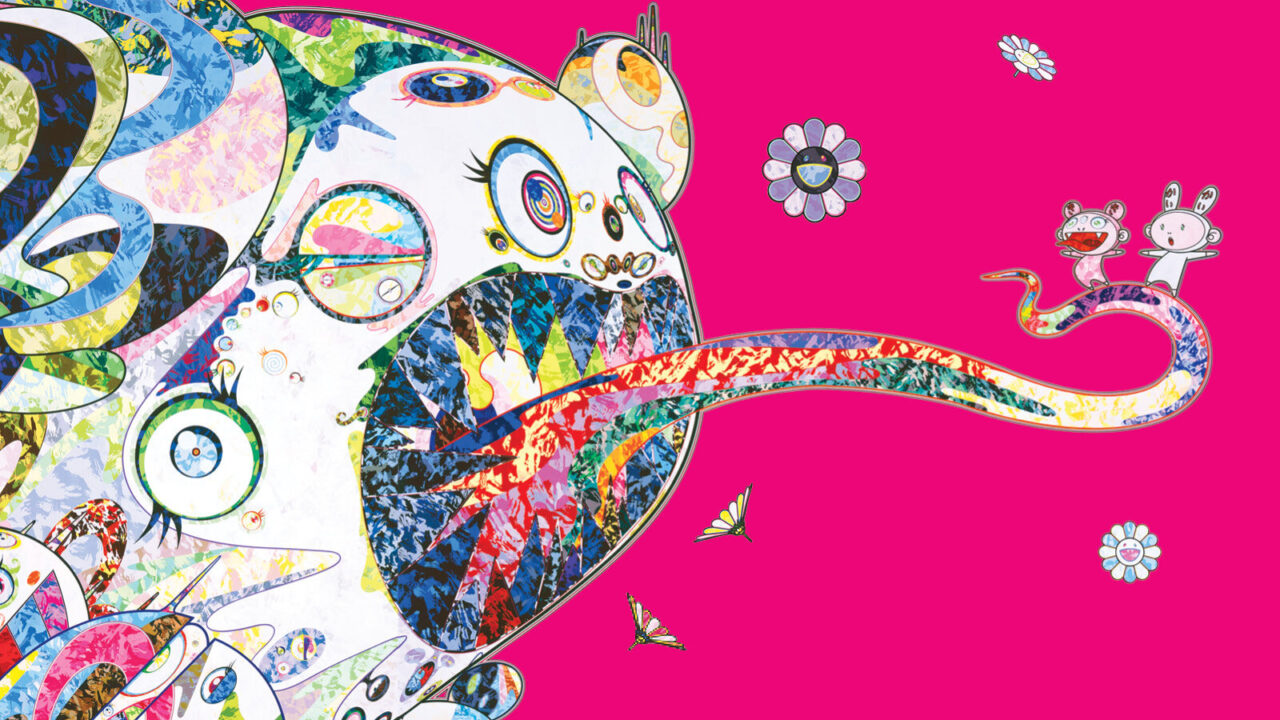
Subsequently his work began to influence the world around him, notably when Murakami’s trademark rainbow flowers began to bloom on the clothes of trendy young streetwearers. In 2019, he completed a 3D-rendered collaborative music video with Billie Eilish for her song “you should see me in a crown.” In 2020, the two collaborated again for a limited merch drop in partnership with UNIQLO. It suffices to say that Murakami’s influence has been far reaching and nearly inescapable for years now, and the artist has adored spotting and seeking every echoed reminder of his bold style in the wild.
So when Murakami’s art became briefly accessible through The Cleveland Museum of Art in Ohio, visitors from across the Midwest – and beyond – eagerly seized the opportunity to experience his work in person. From May to September of 2025 Murakami’s exhibit titled Stepping on the Tail of a Rainbow was available to explore.
“Takashi Murakami uses his art to interpret historical events and their lasting effects, such as the end of World War II, the 2011 Tōhoku earthquake and tsunami, and the COVID-19 pandemic.
Visitors can explore how – after shared traumatic events – art can address crisis, healing, outrage, and escapist fantasy.” (Cleveland Museum of Art)
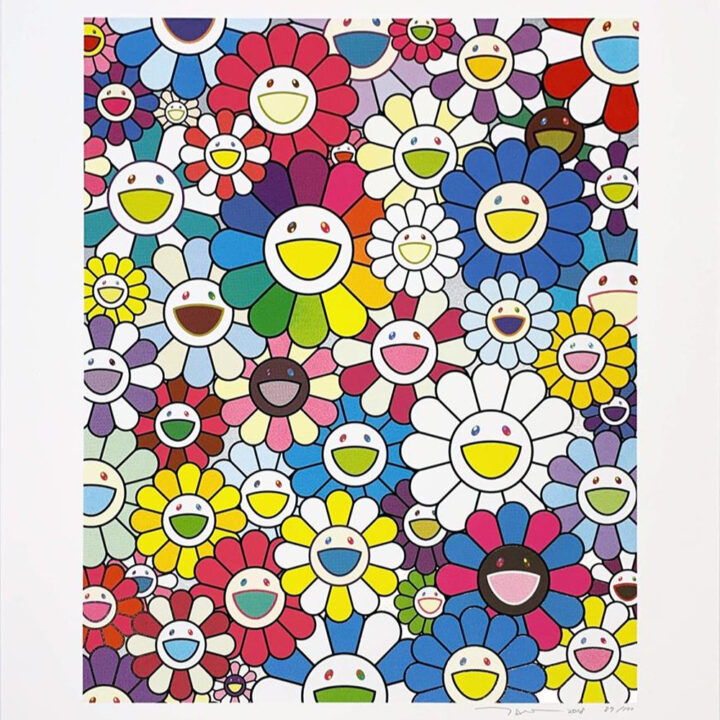
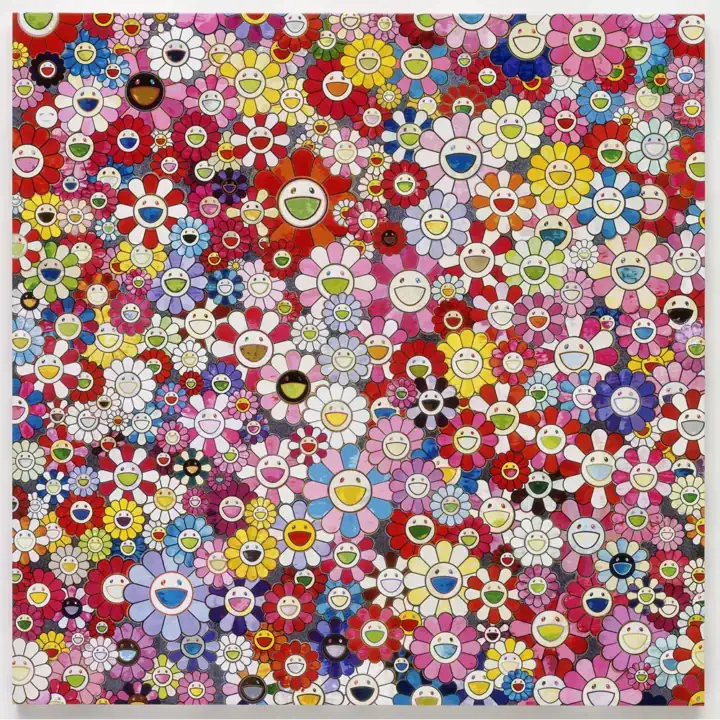
The Cleveland Museum of Art is one of the leading art museums in the United States, home to an expansive collection spanning more than 6,000 years of artistic and cultural history. Better yet, general admission is typically free, making it one of the country’s most accessible cultural institutions. Murakami’s Stepping on the Tail of a Rainbow exhibition, however, required a separate ticket, as did its accompanying Yumedono – a stylised recreation of the Hall of Dreams at Kyoto’s Ninna-ji Temple. Walking through both spaces was, undoubtedly, gorgeous. It felt like, if only for a brief time, another world where even the most horrific events of the past and present seemed surmountable through Murakami’s colourful lens. The world became once more filtered through the saturated lens of childhood, leaving behind not only inspiration, but hope.
A youthful sense of peace emerged as Murakami’s pieces served as reminders of the triumphant and ever-enduring nature of the human spirit. It is an experience that won’t soon be forgotten and one that remains a privilege to have witnessed. However, there were a few cracks in the carefully curated mirage through which reality peeked.
Firstly, the 2020 pieces and beyond seemed to heavily depict the artist’s fall into the NFT digital hellscape. For those fortunate enough to be uninitiated on NFT and crypto culture, NFTs are Non-Fungible Tokens that act as a form of ‘artistic’ digital currency. Its goal was to create a way for people to ethically own the rights to an image in a way that directly supported the artist, however, in practise, NFTs and crypto are more akin to digital trading cards than any form of currency. The system has objectively been far more noteworthy for the infamous amount of scams and fraud left in its wake, due to exploits and Blockchain failures rather than any improvement in the market.
Not to mention that, just like any other initiative in which large chunks of data are stored and circulated through digital storage facilities, NFTs carry an immense environmental cost that is impossible to overlook. The blockchain networks that support them require vast amounts of electricity and water to operate, with the data centres powering them placing increasing strain on the natural resources of their surrounding communities. This concern feels especially pertinent in Ohio, where the exhibition was held. Lake Erie – one of the five Great Lakes bordering the U.S. and Canada – has made a remarkable comeback in recent years in terms of its ecological health and biodiversity, yet the region is increasingly at the centre of discussions surrounding new data centre developments that threaten to undermine that progress. It is an utter shame that companies out of our control continue to put so much of our wellbeing at stake and undo hard-won environmental progress for the sake of speculative digital assets. This may have been an endeavour Murakami initiated in good faith, but it ultimately failed entirely. The project left him destitute and almost led him to declare bankruptcy.
Although Murakami has shown full transparency with these actions, it would have been a remarkable cornerstone on his end if their inclusion in the exhibit carried more explicit musings of remorse, failure, and musings on what it taught him, however this was not the case. If anything, it appears more like an unresolved point of pride that Murakami refuses to let go of.
“Maybe I’m done releasing NFTs,” Murakami said, but he maintains hope that with time, they’ll prove to be an artistic movement beyond anything since pop art. “It’s an artist’s job and vocation to present fresh ideas,” he added. “Expanding NFTs into fine art is what I’m fully pursuing right now.” (Janelle Zara for The Guardian, 2023)
Ignorance is one thing, but to have felt the wrath of this system firsthand and continue the pursuit of it anyway is not only reckless, but irresponsible. This discovery was a supremely disappointing aspect of the exhibit, especially when Lake Erie, Cleveland, and the various surrounding Ohio cities that utilise its water are already at major risk following the recent announcement that an old General Motors plant is slated to be transformed into one such data facility. Murakami’s various collaborations with someone as outwardly environmentally conscious as Billie Eilish make these comments and pieces feel all the more hypocritical. For an exhibition so deeply concerned with humanity’s capacity to heal and endure, this unwavering commitment to NFTs ultimately felt at odds with the very message it sought to convey.
Murakami’s work has long been a source of admiration, so there is sincere hope that this vehement support of NFT and crypto culture comes from a lack of understanding. From one creative to another, this behaviour is bewildering and detrimental to the very nature of his work and the world around us. There are plenty of pieces from what was, otherwise, a beautiful experience that will continue to be revisited in memory. Murakami’s whimsical style will always hold a special place in many hearts, and the hope remains that he will one day return to prioritising more inspired forms of creation.
For years, the bold colours and vivid imagery of Japanese artist Takashi Murakami have captivated audiences around the world. He is, perhaps, most known for his infamous album art present on the covers of a certain tremendously controversial and problematic rappers’ hit albums Graduation (2007) & Kids See Ghosts (2018). In the 2000s and 2010s, his style came to represent a certain nonchalant and childlike wonder through the refined lens of his unique art. Murakami is influenced heavily by pop art, pop culture, fashion, tradition, anime, and manga in his fascinating pieces.
Subsequently his work began to influence the world around him, notably when Murakami’s trademark rainbow flowers began to bloom on the clothes of trendy young streetwearers. In 2019, he completed a 3D-rendered collaborative music video with Billie Eilish for her song “you should see me in a crown.” In 2020, the two collaborated again for a limited merch drop in partnership with UNIQLO. It suffices to say that Murakami’s influence has been far reaching and nearly inescapable for years now, and the artist has adored spotting and seeking every echoed reminder of his bold style in the wild.
So when Murakami’s art became briefly accessible through The Cleveland Museum of Art in Ohio, visitors from across the Midwest – and beyond – eagerly seized the opportunity to experience his work in person. From May to September of 2025 Murakami’s exhibit titled Stepping on the Tail of a Rainbow was available to explore.
“Takashi Murakami uses his art to interpret historical events and their lasting effects, such as the end of World War II, the 2011 Tōhoku earthquake and tsunami, and the COVID-19 pandemic.
Visitors can explore how – after shared traumatic events – art can address crisis, healing, outrage, and escapist fantasy.” (Cleveland Museum of Art)
The Cleveland Museum of Art is one of the leading art museums in the United States, home to an expansive collection spanning more than 6,000 years of artistic and cultural history. Better yet, general admission is typically free, making it one of the country’s most accessible cultural institutions. Murakami’s Stepping on the Tail of a Rainbow exhibition, however, required a separate ticket, as did its accompanying Yumedono – a stylised recreation of the Hall of Dreams at Kyoto’s Ninna-ji Temple. Walking through both spaces was, undoubtedly, gorgeous. It felt like, if only for a brief time, another world where even the most horrific events of the past and present seemed surmountable through Murakami’s colourful lens. The world became once more filtered through the saturated lens of childhood, leaving behind not only inspiration, but hope.
A youthful sense of peace emerged as Murakami’s pieces served as reminders of the triumphant and ever-enduring nature of the human spirit. It is an experience that won’t soon be forgotten and one that remains a privilege to have witnessed. However, there were a few cracks in the carefully curated mirage through which reality peeked.
Firstly, the 2020 pieces and beyond seemed to heavily depict the artist’s fall into the NFT digital hellscape. For those fortunate enough to be uninitiated on NFT and crypto culture, NFTs are Non-Fungible Tokens that act as a form of ‘artistic’ digital currency. Its goal was to create a way for people to ethically own the rights to an image in a way that directly supported the artist, however, in practise, NFTs and crypto are more akin to digital trading cards than any form of currency. The system has objectively been far more noteworthy for the infamous amount of scams and fraud left in its wake, due to exploits and Blockchain failures rather than any improvement in the market.
Not to mention that, just like any other initiative in which large chunks of data are stored and circulated through digital storage facilities, NFTs carry an immense environmental cost that is impossible to overlook. The blockchain networks that support them require vast amounts of electricity and water to operate, with the data centres powering them placing increasing strain on the natural resources of their surrounding communities. This concern feels especially pertinent in Ohio, where the exhibition was held. Lake Erie – one of the five Great Lakes bordering the U.S. and Canada – has made a remarkable comeback in recent years in terms of its ecological health and biodiversity, yet the region is increasingly at the centre of discussions surrounding new data centre developments that threaten to undermine that progress. It is an utter shame that companies out of our control continue to put so much of our wellbeing at stake and undo hard-won environmental progress for the sake of speculative digital assets. This may have been an endeavour Murakami initiated in good faith, but it ultimately failed entirely. The project left him destitute and almost led him to declare bankruptcy.
Although Murakami has shown full transparency with these actions, it would have been a remarkable cornerstone on his end if their inclusion in the exhibit carried more explicit musings of remorse, failure, and musings on what it taught him, however this was not the case. If anything, it appears more like an unresolved point of pride that Murakami refuses to let go of.
“Maybe I’m done releasing NFTs,” Murakami said, but he maintains hope that with time, they’ll prove to be an artistic movement beyond anything since pop art. “It’s an artist’s job and vocation to present fresh ideas,” he added. “Expanding NFTs into fine art is what I’m fully pursuing right now.” (Janelle Zara for The Guardian, 2023)
Ignorance is one thing, but to have felt the wrath of this system firsthand and continue the pursuit of it anyway is not only reckless, but irresponsible. This discovery was a supremely disappointing aspect of the exhibit, especially when Lake Erie, Cleveland, and the various surrounding Ohio cities that utilise its water are already at major risk following the recent announcement that an old General Motors plant is slated to be transformed into one such data facility. Murakami’s various collaborations with someone as outwardly environmentally conscious as Billie Eilish make these comments and pieces feel all the more hypocritical. For an exhibition so deeply concerned with humanity’s capacity to heal and endure, this unwavering commitment to NFTs ultimately felt at odds with the very message it sought to convey.
Murakami’s work has long been a source of admiration, so there is sincere hope that this vehement support of NFT and crypto culture comes from a lack of understanding. From one creative to another, this behaviour is bewildering and detrimental to the very nature of his work and the world around us. There are plenty of pieces from what was, otherwise, a beautiful experience that will continue to be revisited in memory. Murakami’s whimsical style will always hold a special place in many hearts, and the hope remains that he will one day return to prioritising more inspired forms of creation.

Enjoyed this story? Support independent gaming and online news by purchasing the latest issue of G.URL. Unlock exclusive content, interviews, and features that celebrate feminine creatives. Get your copy of the physical or digital magazine today!