The Ebonix Effect with Danielle ‘Ebonix’ Udogaranya
Ten years into her work in Black character design, Danielle ‘Ebonix’ Udogaranya reflects on influence, visibility, and the future of games.
TEXT

Coming up to ten years of creating custom content for The Sims with Ebonix, Dani Udogaranya knew she had to do something huge to celebrate. Beyond the personal milestone of a decade spent creating diverse custom content for The Sims, ten has always been a special number for her. It’s a marker of commitment, growth, and making space where there wasn’t any before. She decided to use this landmark to create an an opportunity to shed light on the incredible work Black creatives have contributed to the gaming industry.
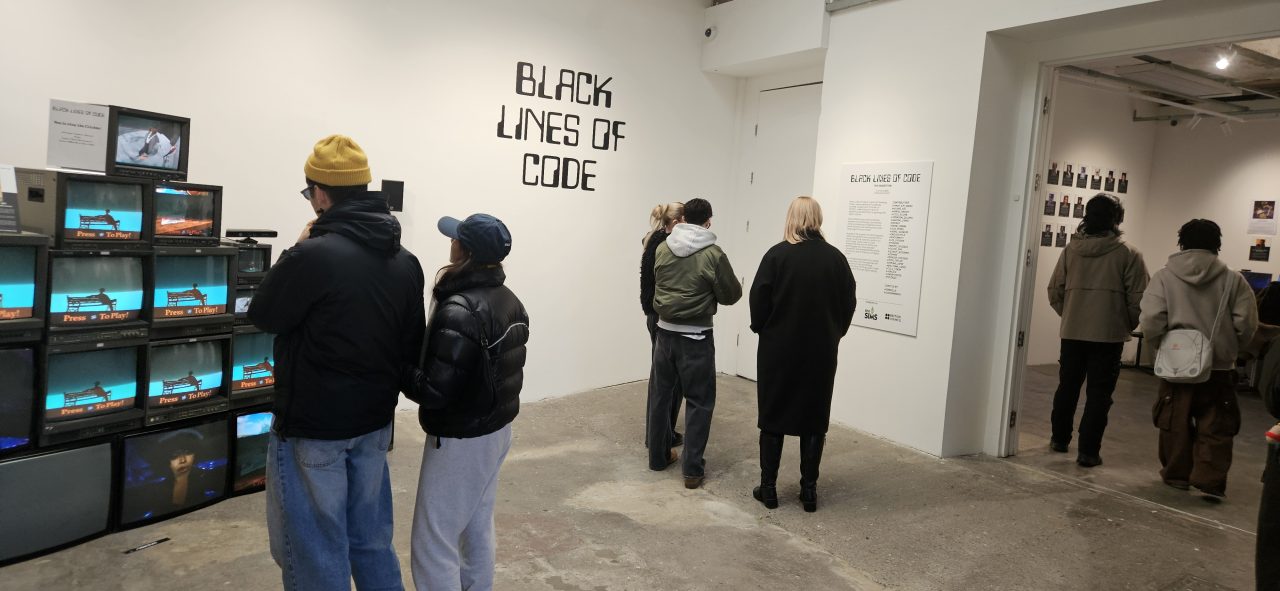
Dani created Black Lines of Code, a free exhibition located in Peckham, South London. Situated right in the heart of one of London’s most historically black boroughs, it transported visitors into a world of creativity where representation is intentional, not an afterthought.
“One way that I can help break that barrier is to make my own, because why not?” Dani said, speaking about her mindset behind creating Black Lines of Code. “I’ve been given a lot of flowers and a lot of props over the years, but I also recognise that I’m not the only one doing that.”
The exhibit offered a uniquely multimedia experience, combining text, images and video to showcase the talents of black gamers across the diaspora. One feature that stood out to me was the computer setup, with playable games by indie developers specially selected by Dani.
At the games station, you could play Caches and Ashes by Lex Fefegha, a short, introspective game about death, the afterlife, and the intersections of technology. I found myself having a genuine philosophical epiphany while playing this simple text-based game, which features two key characters: a pastor and a funeral director, who have very different thoughts on the afterlife.

Wandering through the rustic space, you’ll come across a showcase of game art, integrated with various expressions of black culture, from traditional Ankara clothing to complex braiding patterns, animated down to the finest hair. One screen features Nigerian 3D artist Gusi’s work, alongside a video of her painstaking process, highlighting the creative and technical skills required for 3D character artists, an overlooked role outside of the gaming world. It’s not often we get to see animation and games art held to the same homage and respect as more traditional art, in a physical gallery for our appreciation.
“I want people to go into the future seeing us in the digital sense with that as the expectation.”
Although progress has been made in customisation options for black characters, there is still a lot of room for improvement within the gaming industry. We’ve all seen the boring defaults most black characters are left with – afros, space buns, or Killmonger locs for the edgier masculine look. But black hair is dynamic, and can be shaped and sculpted into endless pieces of art, yet the games industry doesn’t reflect this. This missing representation is what led Dani to create her first piece of The Sims custom content ten years ago.
“There were no tutorials. It was a matter of gathering knowledge from different videos, which didn’t make sense for making hair,” Dani explained. With no artistic background, a break in her career as a carer due to an injury and a noticeable gap in diverse options in The Sims games, Dani gave herself a year to turn Ebonix into something big. Five years later, she worked directly with EA to help incorporate over 100 new skin tones into The Sims 4.
The standout of the show was Dani’s Do It For Them canvas, showcasing supportive comments the artist had received over the years of making custom content for The Sims 4. Parents wrote about the impact on their children, who were able to see their own hairstyles represented in a game for the first time, thanks to Dani’s innovative work. Reading through the comments of support, I found myself tearing up.

In a world where “diversity” is increasingly treated like a bad word, where people are now made fun of for being “woke” and where issues of race are being brushed under the rug, it feels more important than ever for exhibitions like Black Lines of Code to exist.
“For me it was important to bring to the forefront people who are injecting nuanced and meaningful Blackness into code and our virtual experiences. I want people to go into the future seeing us in the digital sense with that as the expectation.” With Black Lines of Code, Dani is turning that expectation into something you can see, play, and step inside.
Coming up to ten years of creating custom content for The Sims with Ebonix, Dani Udogaranya knew she had to do something huge to celebrate. Beyond the personal milestone of a decade spent creating diverse custom content for The Sims, ten has always been a special number for her. It’s a marker of commitment, growth, and making space where there wasn’t any before. She decided to use this landmark to create an an opportunity to shed light on the incredible work Black creatives have contributed to the gaming industry.
Dani created Black Lines of Code, a free exhibition located in Peckham, South London. Situated right in the heart of one of London’s most historically black boroughs, it transported visitors into a world of creativity where representation is intentional, not an afterthought.
“One way that I can help break that barrier is to make my own, because why not?” Dani said, speaking about her mindset behind creating Black Lines of Code. “I’ve been given a lot of flowers and a lot of props over the years, but I also recognise that I’m not the only one doing that.”
The exhibit offered a uniquely multimedia experience, combining text, images and video to showcase the talents of black gamers across the diaspora. One feature that stood out to me was the computer setup, with playable games by indie developers specially selected by Dani.
At the games station, you could play Caches and Ashes by Lex Fefegha, a short, introspective game about death, the afterlife, and the intersections of technology. I found myself having a genuine philosophical epiphany while playing this simple text-based game, which features two key characters: a pastor and a funeral director, who have very different thoughts on the afterlife.
Wandering through the rustic space, you’ll come across a showcase of game art, integrated with various expressions of black culture, from traditional Ankara clothing to complex braiding patterns, animated down to the finest hair. One screen features Nigerian 3D artist Gusi’s work, alongside a video of her painstaking process, highlighting the creative and technical skills required for 3D character artists, an overlooked role outside of the gaming world. It’s not often we get to see animation and games art held to the same homage and respect as more traditional art, in a physical gallery for our appreciation.
“I want people to go into the future seeing us in the digital sense with that as the expectation.”
Although progress has been made in customisation options for black characters, there is still a lot of room for improvement within the gaming industry. We’ve all seen the boring defaults most black characters are left with – afros, space buns, or Killmonger locs for the edgier masculine look. But black hair is dynamic, and can be shaped and sculpted into endless pieces of art, yet the games industry doesn’t reflect this. This missing representation is what led Dani to create her first piece of The Sims custom content ten years ago.
“There were no tutorials. It was a matter of gathering knowledge from different videos, which didn’t make sense for making hair,” Dani explained. With no artistic background, a break in her career as a carer due to an injury and a noticeable gap in diverse options in The Sims games, Dani gave herself a year to turn Ebonix into something big. Five years later, she worked directly with EA to help incorporate over 100 new skin tones into The Sims 4.
The standout of the show was Dani’s Do It For Them canvas, showcasing supportive comments the artist had received over the years of making custom content for The Sims 4. Parents wrote about the impact on their children, who were able to see their own hairstyles represented in a game for the first time, thanks to Dani’s innovative work. Reading through the comments of support, I found myself tearing up.
In a world where “diversity” is increasingly treated like a bad word, where people are now made fun of for being “woke” and where issues of race are being brushed under the rug, it feels more important than ever for exhibitions like Black Lines of Code to exist.
“For me it was important to bring to the forefront people who are injecting nuanced and meaningful Blackness into code and our virtual experiences. I want people to go into the future seeing us in the digital sense with that as the expectation.” With Black Lines of Code, Dani is turning that expectation into something you can see, play, and step inside.

Enjoyed this story? Support independent gaming and online news by purchasing the latest issue of G.URL. Unlock exclusive content, interviews, and features that celebrate feminine creatives. Get your copy of the physical or digital magazine today!